Commercial Electrician Services for Franchise Locations
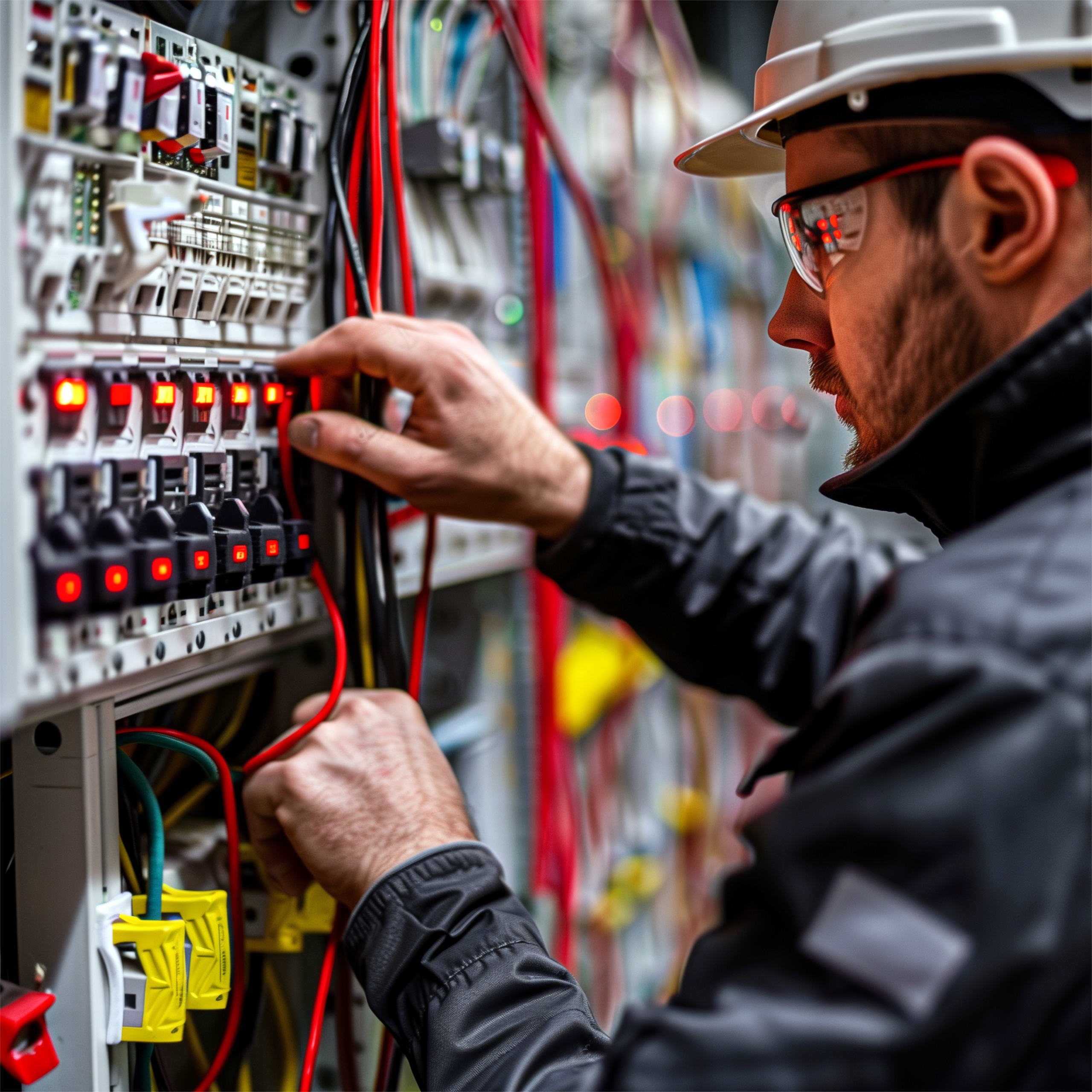
A franchise location lives under two kinds of pressure at once. It has to operate like a local business, with local utility conditions, local inspectors, local landlords, and local customers. At the same time, it has to match a national or regional brand standard that leaves very little room for improvisation. Electrical work sits right at the center of that tension.
When owners, operators, and facilities teams think about opening or maintaining franchise sites, they often focus first on visible elements such as signage, interiors, kitchen equipment, point-of-sale systems, and security. The electrical scope is what makes all of those systems function together, reliably, safely, and on schedule. A missed circuit in a hair salon can delay opening day. An undersized panel in a quick-service restaurant can cause nuisance trips during lunch rush. A poorly coordinated sign connection can hold up final approval even when the dining room looks ready.
That is why franchise work demands more than a contractor who can pull wire and set devices. It calls for a Commercial Electrician who understands repeatable standards, multi-site coordination, turnover deadlines, and the practical realities of occupied commercial spaces.
Franchise electrical work is not just standard tenant improvement
On paper, many franchise locations look similar from one site to the next. The plans may call for the same menu boards, the same fryers, the same beverage stations, the same accent lighting package, or the same point-of-sale layout. In practice, no two sites are quite alike.
One location may be a second-generation restaurant with usable conduit pathways and a service that only needs minor upgrades. Another may be a retail shell in a new mixed-use building where every trade is stacked on a compressed schedule. A third may be an older endcap space in a shopping center with limited panel capacity, questionable as-built drawings, and landlord restrictions that slow exterior work.
That mismatch between prototype and field conditions is where experienced electrical planning matters. Franchise operators often assume the prototype drawing tells the whole story. It does not. Prototype sets establish intent. Field verification determines what is possible, what needs redesign, and where time and cost can drift if no one catches issues early.
An experienced Commercial Electrician will usually start by reading far beyond the electrical sheets. Equipment schedules, reflected ceiling plans, signage details, low-voltage scopes, landlord criteria, health department comments, and utility requirements all affect the electrical path. In restaurant and food service franchises, refrigeration loads and hood-related systems can change service calculations fast. In retail and fitness concepts, lighting controls and branded feature lighting often create commissioning problems if they are treated as an afterthought.
The opening deadline changes everything
A franchise opening date is rarely flexible. Grand openings are tied to lease commencement, advertising, staff onboarding, and supply deliveries. In some systems, a delayed launch can affect regional expansion plans or financing benchmarks. That urgency changes how electrical work must be managed.
The challenge is not simply working faster. It is sequencing work so the right things happen early. Service applications, panel lead times, utility coordination, rough-in inspections, sign feeds, fire alarm interfaces, data rack power, and final trim all carry dependencies. A delay in any one of those items can ripple through the job.
I have seen projects where the interiors were 95 percent complete, but the site could not open because the illuminated exterior sign lacked final power connection and inspection sign-off. I have also seen new franchise operators spend heavily on equipment rentals and labor compression because switchgear delivery slipped by several weeks. Those are expensive lessons. The electrical contractor on franchise work has to think like both a builder and an operations partner.
For multi-site rollout programs, the stakes are even higher. Once a franchise group is opening three, six, or ten locations in a market, consistency matters almost as much as speed. Different municipalities may inspect differently, but the owner still needs a predictable process. Standardized documentation, repeatable naming conventions for panels and circuits, and disciplined closeout packages save real time across a portfolio.
What a franchise owner should expect from a Commercial Electrician
The right electrical partner for franchise work brings technical execution, but also project discipline. That discipline shows up long before rough-in.
A good preconstruction review should identify service size concerns, utility lead times, equipment with long procurement cycles, special code triggers, and disconnect requirements that often get missed on generic budgets. If the franchise concept uses heavy kitchen equipment, EV charging for a branded fleet component, or large digital menu systems, those loads need a careful look. If the concept depends on ambiance, such as boutique fitness, salon, hospitality, or upscale food service, lighting intent should be coordinated with the actual fixture package and controls strategy rather than assumed from a render.
Communication also needs to be sharper than on a one-off local buildout. Franchise stakeholders can include the franchisee, a corporate facilities representative, the architect, a construction manager, a landlord rep, equipment installers, low-voltage vendors, and local inspectors. Electrical questions have a habit of sitting between scopes. Who powers the security system? Who provides the receptacles for digital ordering kiosks? Who runs conduits for future data? Who handles the emergency disconnect for cooking equipment? If these boundaries are not sorted early, the field team ends up solving them under deadline pressure.
The strongest Commercial Electrician firms handle those gray areas with direct language and written clarifications. That does not eliminate every change order, but it reduces avoidable ones.
The hidden complexity behind “standard” branded environments
Franchise brands depend on consistency. Customers expect a familiar experience whether they walk into a coffee shop in a suburban strip center or an airport-adjacent retail pad. That consistency has an electrical backbone.
Lighting is a good example. Corporate design may specify color temperature, dimming behavior, fixture spacing, and accent locations to create a recognizable feel. In the field, ceiling conditions, joist conflicts, HVAC routing, and existing junction box locations can all interfere with that plan. If the electrical team improvises without understanding the visual intent, the store may technically pass inspection while still missing the brand target.
Signage creates similar issues. Exterior signs often involve landlord approvals, dedicated circuits, photocell or control requirements, roof access restrictions, and coordination with sign vendors who arrive on their own schedule. Interior branded signs may need backing, switched legs, transformers, or access panels. These details can look minor in plan review but become major if they are ignored until the last week.
Then there is equipment integration. A franchise may use owner-furnished equipment from approved vendors, but those vendors rarely own the electrical design. Someone still has to verify voltage, phase, amperage, plug type, disconnect location, cord clearances, and final placement. The most expensive surprises on franchise jobs are often not dramatic code violations. They are small disconnects between submittals, field conditions, and procurement decisions.
Different franchise sectors, different electrical priorities
Not all franchises stress the electrical system the same way. A quick-service restaurant, a medical franchise, https://sergioeogf058.sagecurrent.com/posts/commercial-electrician-solutions-for-manufacturing-plants a fitness chain, and a retail boutique may each occupy similar square footage, but their risk points are different.
In food service, uptime is everything. Cold storage, cooking lines, ventilation interfaces, and sanitation-related equipment create dense electrical scopes. Panel space disappears quickly. Breaker coordination matters. So does service reliability. If a restaurant loses power to key equipment in the middle of service, waste and lost revenue show up immediately.
In beauty, wellness, and salon concepts, distributed branch circuits and clean layout execution tend to matter more. Chairs, stations, washers, dryers, specialty treatment devices, and customer-facing lighting all compete for a polished finish. These locations often suffer when too much value engineering happens behind finished millwork.
Fitness franchises bring another layer. Large mechanical loads, audiovisual systems, access control, emergency lighting, and high customer occupancy all intersect. The electrical plan has to support not just the workout floor, but the member experience from check-in to locker room.
Retail concepts may appear simpler, but they can be deceptively sensitive to lighting quality, display flexibility, and future merchandising changes. A store that opens with the bare minimum electrical infrastructure may struggle every time seasonal fixtures or display resets are introduced.
Code compliance across multiple jurisdictions
One of the hardest parts of franchise expansion is that the brand stays the same while the rules do not. A location in one county may pass with relatively straightforward review. A location forty minutes away may trigger additional requirements for energy compliance, emergency disconnect labeling, GFCI interpretation, accessibility details, or utility metering provisions.
This is where local knowledge pays for itself. National brands often prefer repeatable vendor relationships, and there is real value in consistency. Still, a Commercial Electrician with local permitting and inspection experience can spot issues that are easy to miss from a corporate template. The most successful franchise programs usually combine both: a repeatable build standard and local execution by electricians who know the AHJ, utility process, and regional construction norms.
It is also worth noting that code compliance is not just about passing inspection. Electrical rooms need workable clearances. Panels need sensible circuit schedules. Disconnects need to be where technicians can actually use them. Lighting controls need to be understandable to store staff. Serviceability matters after the ribbon-cutting.
I have walked into more than one franchise back-of-house area where the labeling technically existed, but no manager could tell which breaker served the ice machine or the point-of-sale counter. That may seem minor until a circuit trips on a Saturday afternoon and employees start guessing. Good electrical work supports operations long after the permit is closed.
Renovations and occupied locations require a different mindset
Many franchise projects are not greenfield buildouts. They are remodels, refreshes, rebrands, equipment swaps, or phased upgrades in active spaces. That changes the safety and scheduling demands significantly.
In an occupied location, downtime has a price. Some owners can absorb a one-day shutdown. Others need the work staged overnight, early morning, or across several short windows. Electrical crews in those environments need tighter lockout procedures, cleaner housekeeping habits, and more realistic sequencing.
A lighting retrofit, for example, may sound simple until you factor in customer traffic, staff operations, ceiling conditions, and disposal rules for existing fixtures. A panel replacement in a functioning retail store requires careful planning around temporary power, refrigeration, security, and transaction systems. Even something as straightforward as adding circuits for new branded menu boards can become disruptive if the cable path runs above finished areas during business hours.
Franchise operators should ask direct questions about how disruption will be managed, not just whether the contractor can “work around operations.” That phrase gets used too casually. Real occupied-space planning means defining shutdown windows, temporary power needs, noise limits, dust control expectations, and communication protocols if something unexpected appears in the field.
Where electrical budgets usually go sideways
Franchise owners are often balancing franchise fees, real estate costs, equipment packages, signage, and staffing well before the doors open. That can make electrical pricing feel like a category to squeeze. Sometimes there is room for smarter purchasing. Just as often, there is only room for deferring risk until later.
Budget trouble usually starts in one of three places: incomplete existing-condition information, scope gaps between trades, or late equipment decisions. If the site survey misses service limitations, the budget may not carry enough for upgrades. If the low-voltage and electrical scopes are loosely defined, multiple vendors may assume someone else is providing pathways and power. If owner-furnished equipment changes after rough-in, rework follows.
There is also a difference between reducing cost and reducing resilience. Value engineering may make sense when it removes redundant decorative fixtures, simplifies control zones, or adjusts device placement without affecting use. It becomes shortsighted when it cuts spare capacity, strips maintenance access, or leaves no room for brand evolution. Franchise concepts change. Menu boards become digital. POS systems expand. More refrigeration gets added. Pickup shelves turn into heated storage. If every panel lands at capacity on opening day, the next update gets expensive.
A practical budgeting discussion should separate must-haves from nice-to-haves, but it should also identify infrastructure that is worth protecting even when money is tight.
A sensible pre-opening electrical checklist
Before a franchise site gets too close to launch, a short, disciplined review can prevent avoidable problems. The most useful checklists are not long. They focus on the items most likely to block opening or create immediate operational headaches.
- Confirm that utility service, meter release, and any required landlord approvals are fully complete, not just “in process.”
- Verify owner-furnished equipment against installed power, receptacles, disconnects, and actual field placement.
- Test lighting controls, emergency lighting, illuminated signage, and any occupancy or timeclock functions under real operating conditions.
- Check panel directories and critical circuit identification for refrigeration, POS, security, internet equipment, and specialty devices.
- Walk the site with operations staff so they know shutoff locations, breaker access, and who to call if a critical system fails.
That last point matters more than people expect. A store manager does not need to think like an electrician, but they do need a basic orientation. When something stops working during the first month of operations, the response should be informed, not improvised.
Long-term service matters as much as installation
Opening a franchise location is only the beginning of the electrical relationship. The better question is whether the site will be easy to maintain over five or ten years of operation.
Electrical systems in franchise settings take abuse. Breaker panels get accessed by multiple vendors. Receptacles near equipment wear out. Lighting drivers fail. Exterior signs weather. Added devices appear over time, often installed by different parties with varying documentation standards. If the original installation was clean, labeled, and thoughtfully arranged, these changes stay manageable. If it was rushed or poorly documented, every service call costs more.
This is why many franchise groups look for electrical partners who can support both projects and service. A new-store construction team may turn over the site, but a service department keeps the portfolio running. That continuity helps when recurring issues show up across multiple locations. Maybe a certain lighting control setup confuses staff. Maybe a particular kitchen circuit arrangement proves too tight during peak demand. Maybe an exterior sign transformer location is creating repeat maintenance labor. Across one store, those are annoyances. Across twenty stores, they become operating patterns.
A Commercial Electrician who sees both sides of the lifecycle can make better recommendations during buildout. They know what tends to fail, what ends up inaccessible, and what owners regret not upgrading.
Choosing the right electrical partner for a franchise rollout
Selection should go beyond price and availability. Franchise owners need to know whether the electrician understands rollouts, branding standards, documentation, and live business operations.
Ask how they handle prototype drawings that do not quite fit field conditions. Ask who coordinates utility timelines. Ask what their closeout package includes. Ask whether they can support after-hours work, service calls, and future refreshes. Ask how they communicate scope gaps before they become schedule problems. These questions reveal far more than a polished proposal ever will.
It also helps to look for signs of disciplined execution in small details. Are their RFIs clear and timely? Do they identify long-lead items early? Can they explain where franchise projects typically encounter change orders? Do they talk about labeling, training, and maintainability, or only about installation speed? Fast is useful. Predictable is better.
For multi-location franchisees, standardization should extend to electrical administration. Similar panel labeling, consistent service documentation, photo records, and organized as-builts make future repairs and remodels easier. A store portfolio becomes much more manageable when each location does not feel like a completely separate puzzle.
The real value of strong electrical work in franchise spaces
Customers rarely notice well-executed electrical work, and that is the point. They notice when the dining room lighting feels wrong, when the checkout station loses power, when the sign is dark, when a refrigerated display warms up, or when a remodel drags on because systems were not coordinated properly.
Franchise owners feel the impact even more directly. They see it in opening dates met instead of missed. They see it in fewer emergency service calls, cleaner inspections, smoother equipment installations, and stores that can adapt as the brand evolves. Good electrical work is not only about code compliance. It supports uptime, brand consistency, staff confidence, and future flexibility.
That is why franchise locations need more than basic installation labor. They need a Commercial Electrician who can translate a repeatable brand into a dependable, site-specific electrical system, one that works on opening day and keeps working after the excitement wears off.
Paxos Electric Company, LLC
255 NJ-15
Wharton, NJ 07885
(973) 598-8543
FAQ About Commercial Electrician
How much should a commercial electrician charge per hour in Wharton NJ?
Hourly rates vary by contractor, job complexity, and timing. Ask whether the quote includes a service minimum, travel, materials, and any after-hours charges. A written estimate makes it easier to compare the total cost.
How to estimate commercial electrical jobs?
Start with a defined scope and a site walkthrough. Share the plans, equipment specifications, site access details, and any limits on shutdowns. Ask the contractor to itemize labor, materials, and testing, and to identify permit responsibilities and exclusions.
Do any electricians give free estimates?
Some contractors offer free estimates for planned projects. Paxos Electric Company offers free estimates for commercial electrical work. Ask when scheduling whether troubleshooting or diagnostic visits carry a separate fee.